Work in progress.
Putting the final touches on my portfolio. Check back soon.
Manage cookies
Cookie Settings
Cookies necessary for the correct operation of the site are always enabled.
Other cookies are configurable.
Other cookies are configurable.
01
Project Overview
Parti
End-to-end product design and design management for a SocialFi streaming platform with Web3 features and hybrid payments, helping the project secure investment from Social Leverage and International Blockchain Consulting.

My Contribution
I started designing the platform from scratch in 2022 as a project combining a launchpad, a DEX, and an NFT marketplace to support the Partisia Blockchain ecosystem. We went through multiple iterations and product directions before it evolved into a standalone product, where I continued leading the design work.
In 2023, I was promoted to Head of Product, defining product strategy with the founder, managing the team, and overseeing feature delivery. I took the product from early concepts to the MVP launch and then to a fully functional platform, helping the company secure investment from Social Leverage and IBC.
- Timeline2022-2024
- RoleHead of Product & Founding Designer
- Team
- Me (Head of Product & Founding Designer)
- Thomas Powers (CTO & Backend Developer)
- Damir Demirovici (DevOps & Backend Developer)
- Danijel Demirovici (Frontend Developer)
- Jason Mui (Full-Stack Developer)
- Palina Lelis (Product Designer)
Goals
The project went through several shifts in product direction and goals. It initially started as a platform combining a launchpad, a DEX, and an NFT marketplace to support the Partisia Blockchain ecosystem and drive adoption, but later evolved into a standalone product.
From that point, the core objective became building a platform that combined streaming and social features with Web3 functionality, attracting both crypto power users and a mainstream audience.
Guided by user insights, we kept the crypto functionality lightweight and secondary to avoid overwhelming the general audience. To gradually onboard them into the crypto experience, we introduced simple engagement mechanisms (a tapping game, daily tasks, and a leaderboard) that increased their interest in trying it and prepared them for the airdrop.
Challenges
The project faced significant challenges due to shifting product directions, rapid iteration, and tight timelines. This often required designing and building features before validation and without proper user research, which led to some functionality being discarded later.
The evolving priorities also created product complexity that had to be simplified once we began collecting real user feedback.
Additionally, designing for both crypto-native users and mainstream audiences introduced competing expectations, requiring careful trade-offs to create a unified and intuitive experience.
Outcomes
The product made strong early progress despite a rapidly evolving scope and tight timelines.
Within the first three months after launch, the platform attracted creators from Kick and Twitch, showed promising engagement patterns, and demonstrated clear potential for growth.
This traction contributed to securing early-stage investment from Social Leverage and International Blockchain Consulting and helped validate the direction of the product.
Highlights
- Designed core streaming, social, and Web3 interfaces, along with a hybrid crypto–card payment flow.
- Balanced the needs of Web3 power users and mainstream audiences through research and testing.
- Delivered a fully functional MVP in six months.
- Contributed to securing early-stage funding from Social Leverage and International Blockchain Consulting.
02
Core UX Process
User Research
When it was decided that Parti would evolve into a standalone product, it became clear to me that we could no longer postpone research. I made it a priority to validate the founder’s vision and hypotheses and align them with real user needs.
The main question was whether mainstream streaming audiences and creators were open to crypto, and whether their goals overlapped with those of Web3 users. To explore this, we interviewed creators and fans (both familiar and unfamiliar with Web3) to understand what actually mattered to them.
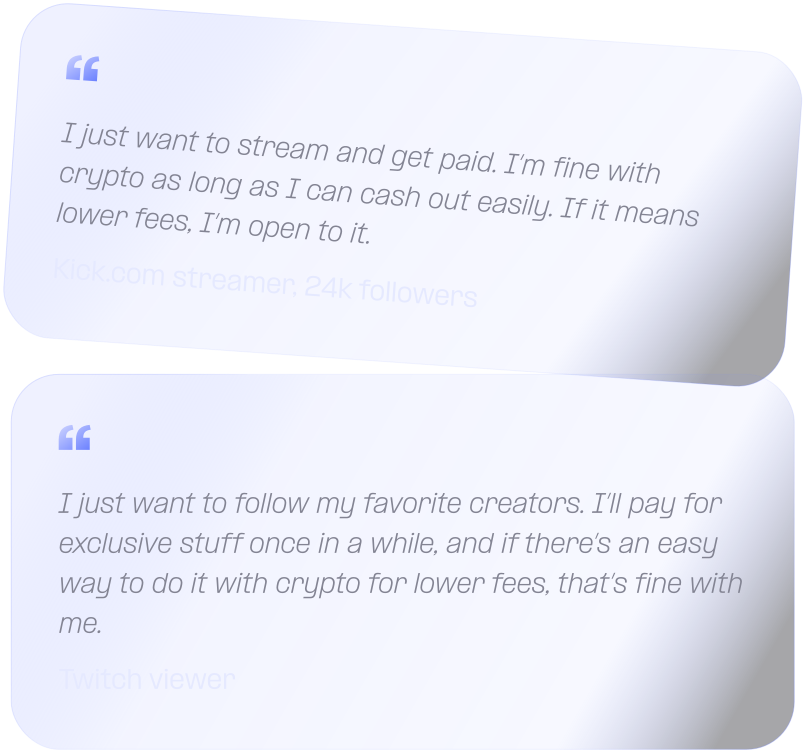
The feedback varied, but one insight stood out: mainstream users valued familiar streaming and social features above all, yet were open to crypto if it felt easy, safe, and offered lower fees.
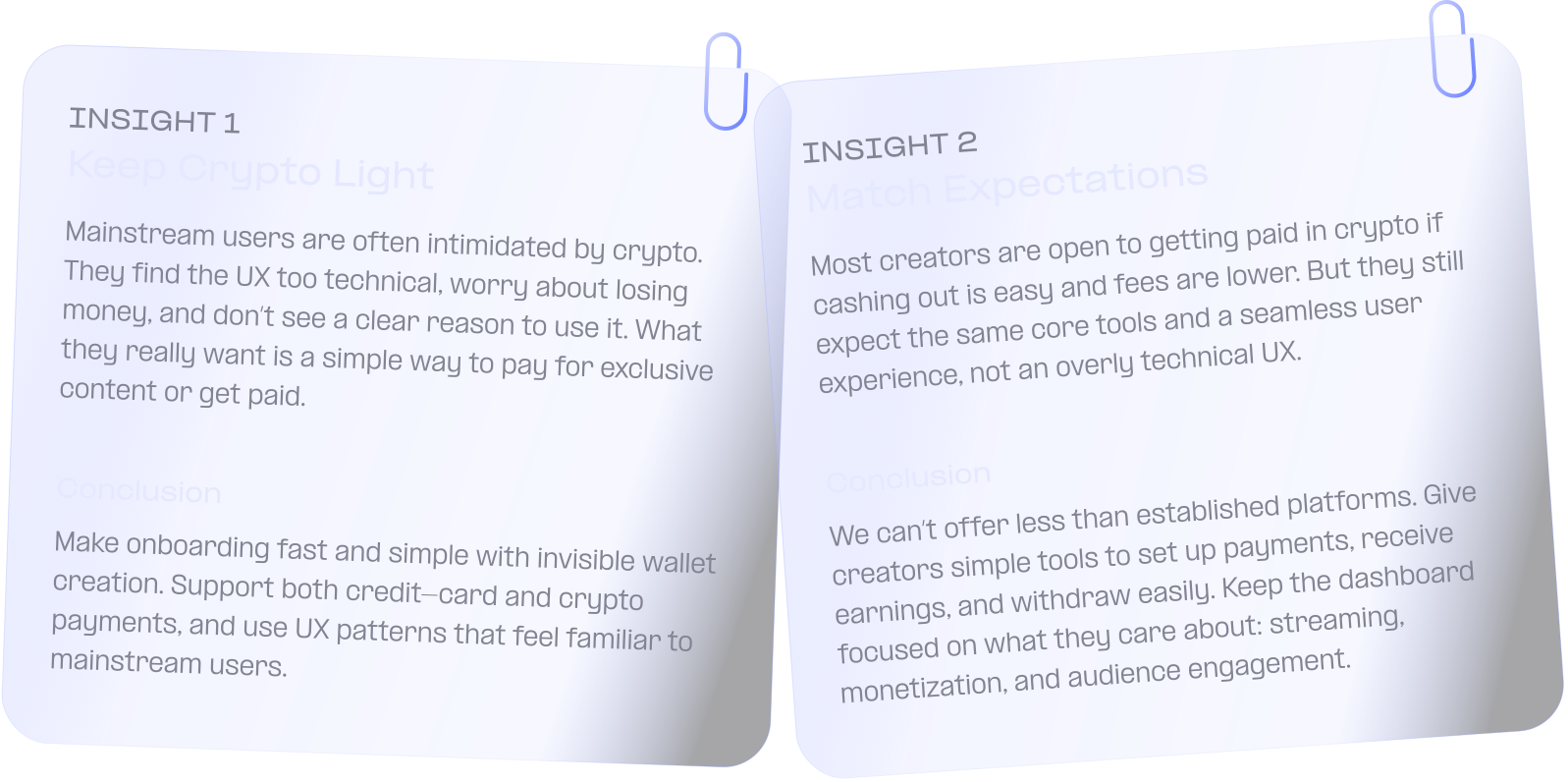
This showed us an opportunity to combine familiar features with lightweight crypto, which would attract users from both worlds and gradually onboard mainstream users into crypto.
Personas & JTBD
Based on user research, we created four personas across two roles and two levels of Web3 familiarity. This helped us cover key user JTBD, from simple and familiar to advanced crypto.
- JordanGrowing streamerKey JTBD
When streaming, I want familiar tools and simple payouts so I can focus on content. I’m open to crypto if it’s easy to use and lowers my fees. - YunaCasual viewerKey JTBD
When watching my favorite creators, I want fast, simple access to their content so I can enjoy and engage without complicated tech, especially on mobile. - MarcusDeFi power user & digital collectorKey JTBD
When looking for valuable opportunities, I want early access to creators and exclusive drops so I can stay ahead of the market and capture upside early. - SashaCrypto influencerKey JTBD
When growing my creator brand, I want a single place to publish, sell, and reward my community so I can monetize without relying on multiple platforms.
Competitive landscape analysis
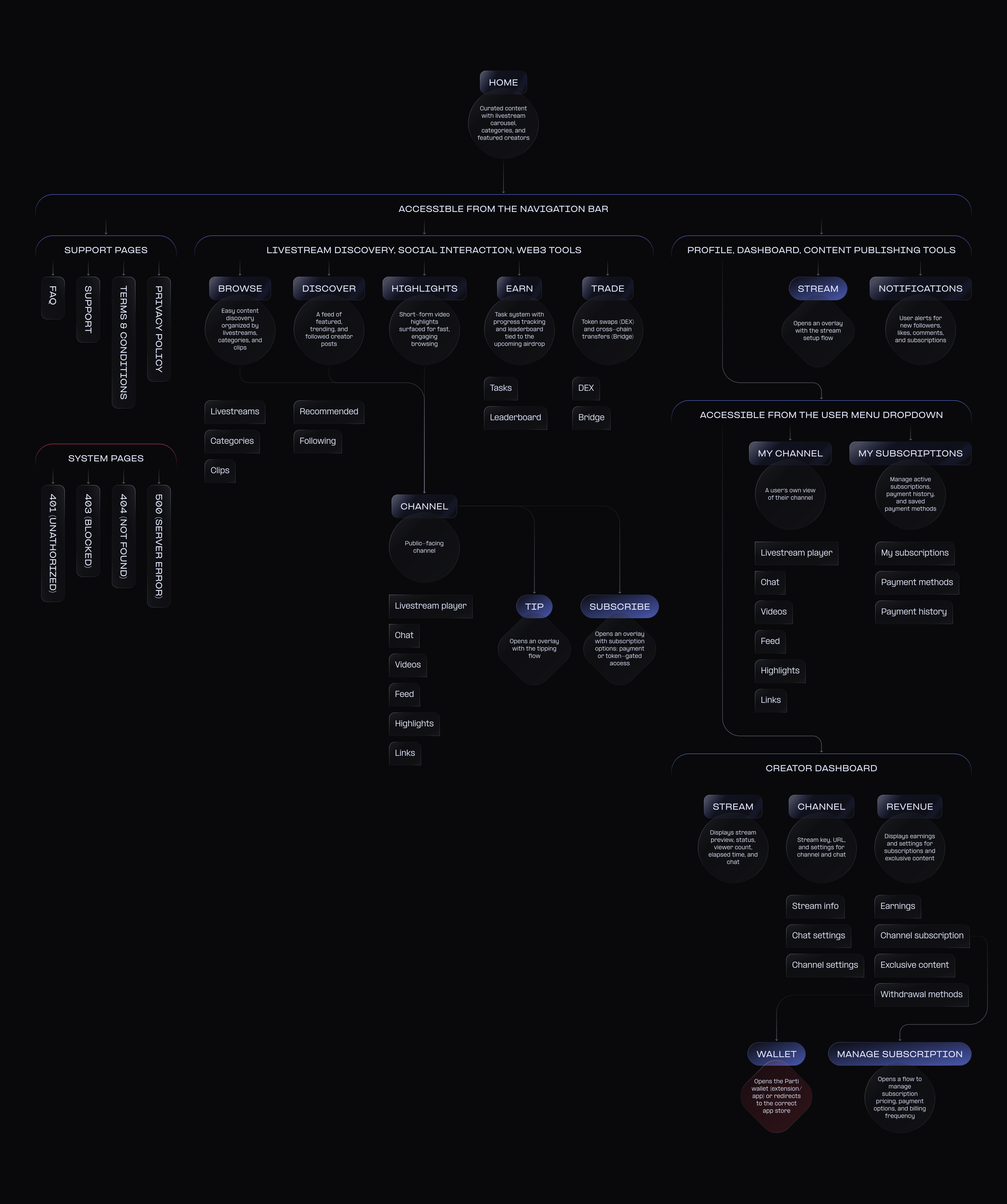
I mapped the competition in three key areas: livestreaming and social features, content monetization and creator tools, and Web3 infrastructure.
- Streaming & SocialI analyzed livestreaming platforms to learn familiar UX patterns in streaming, discovery, chat, and community.
- Monetization platformsWe reviewed monetization tools to see how creators sell access, structure tiers, and connect with audiences.
- Web3On the crypto side, we studied wallet UX, DEXes, bridges, payments, and token-gated content to spot patterns and pain points unique to Web3.
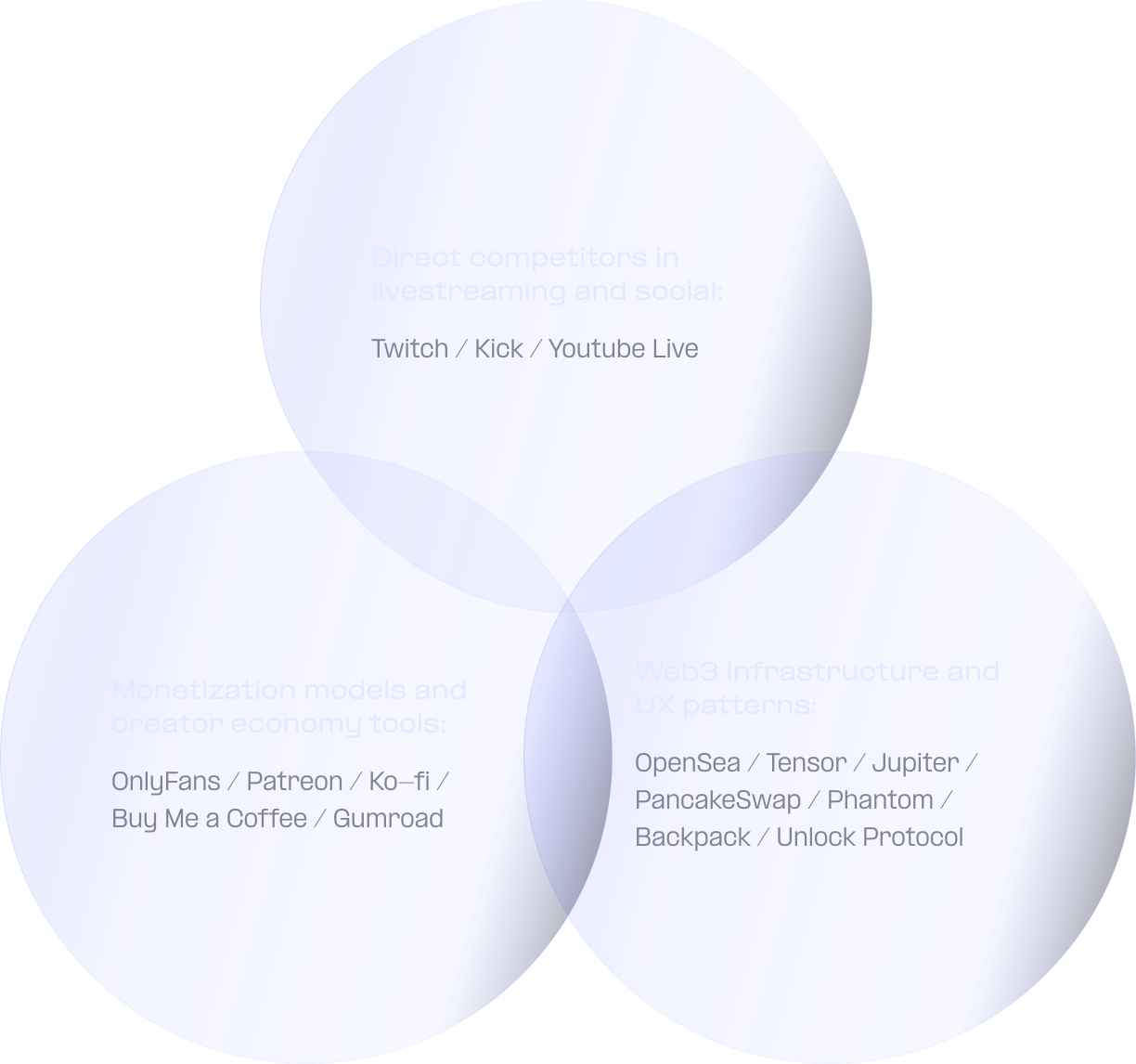
My goal was to identify what users expect, where they fall short, and how those gaps can be addressed to create a seamless user experience.
03
Visual Direction
Visual Direction

As mentioned earlier, Parti began as a project supporting Partisia Blockchain, so it originally inherited some of that brand’s colors and fonts. When Parti became a standalone product and outgrew its Partisia roots, I proposed a full rebrand to get a fresher, more modern look that matched the new direction and audience.
We chose a dark theme, a bright electric-blue accent, and a modern display font. For the layout, I focused on a minimal, neutral design with strong spacing and clear hierarchy so the content stays front and center.
Overall, the goal was to create a fresh, modern visual identity that felt familiar to streamers and gamers, stood apart from Twitch and Kick, and didn’t overshadow the content.



04
Social & Streaming
Homepage

Case study in progress.
More sections coming soon.
More sections coming soon.